There’s a lot of noise out there about what an economic slowdown could mean for the housing market. And if it leaves you feeling a little uneasy, you’re not alone. But here’s the thing.
If you’re worried about what a potential recession could mean for the value of your home, or your homebuying power, your trusted REMAX® agent is here to help set the record straight. You don't have to fear the market when you understand what the data actually shows.
A Recession Doesn’t Automatically Mean Home Prices Will Fall
It’s easy to assume that if the economy slows down, home prices will fall. You might remember what happened in 2008. But the truth is: the housing crash of 2008 was an exception — not the rule.
It hadn’t happened before. And it hasn’t happened since. But what made 2008 so different? It was a flood of oversupply and very different lending standards. And everyone remembers how painful that time was.
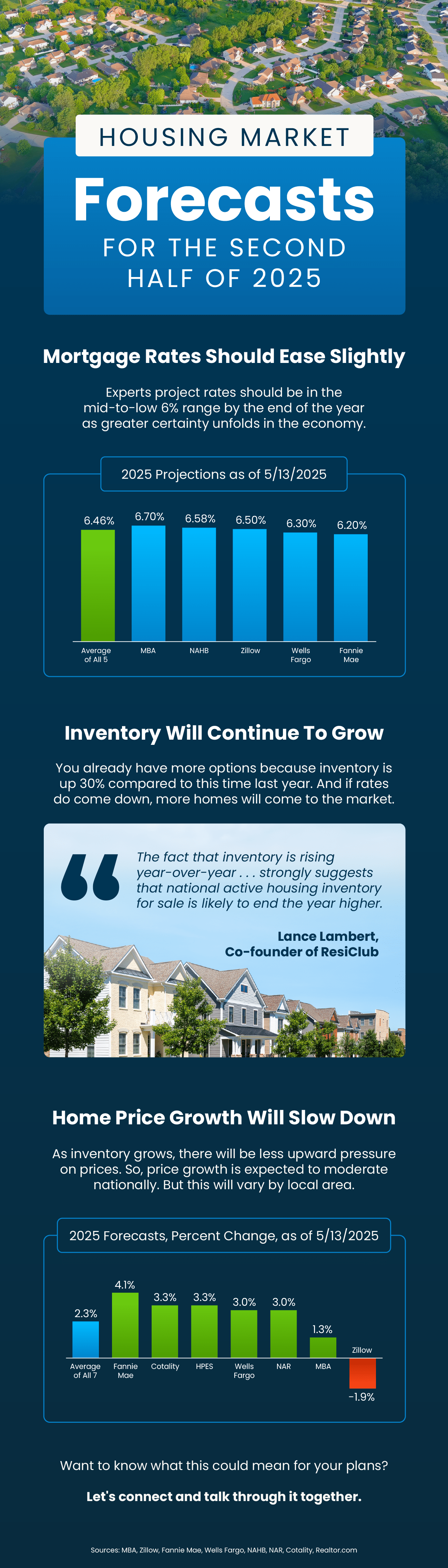
Today, lending is much tighter, and even with inventory rising, the overall number of homes for sale remains well below normal levels. That keeps upward pressure on prices — and it keeps prices from falling significantly on a national level. And while prices are moderating in some markets today, a significant crash is unlikely.
In fact, according to data from Cotality, in four of the last six recessions, home prices actually went up (see graph below):
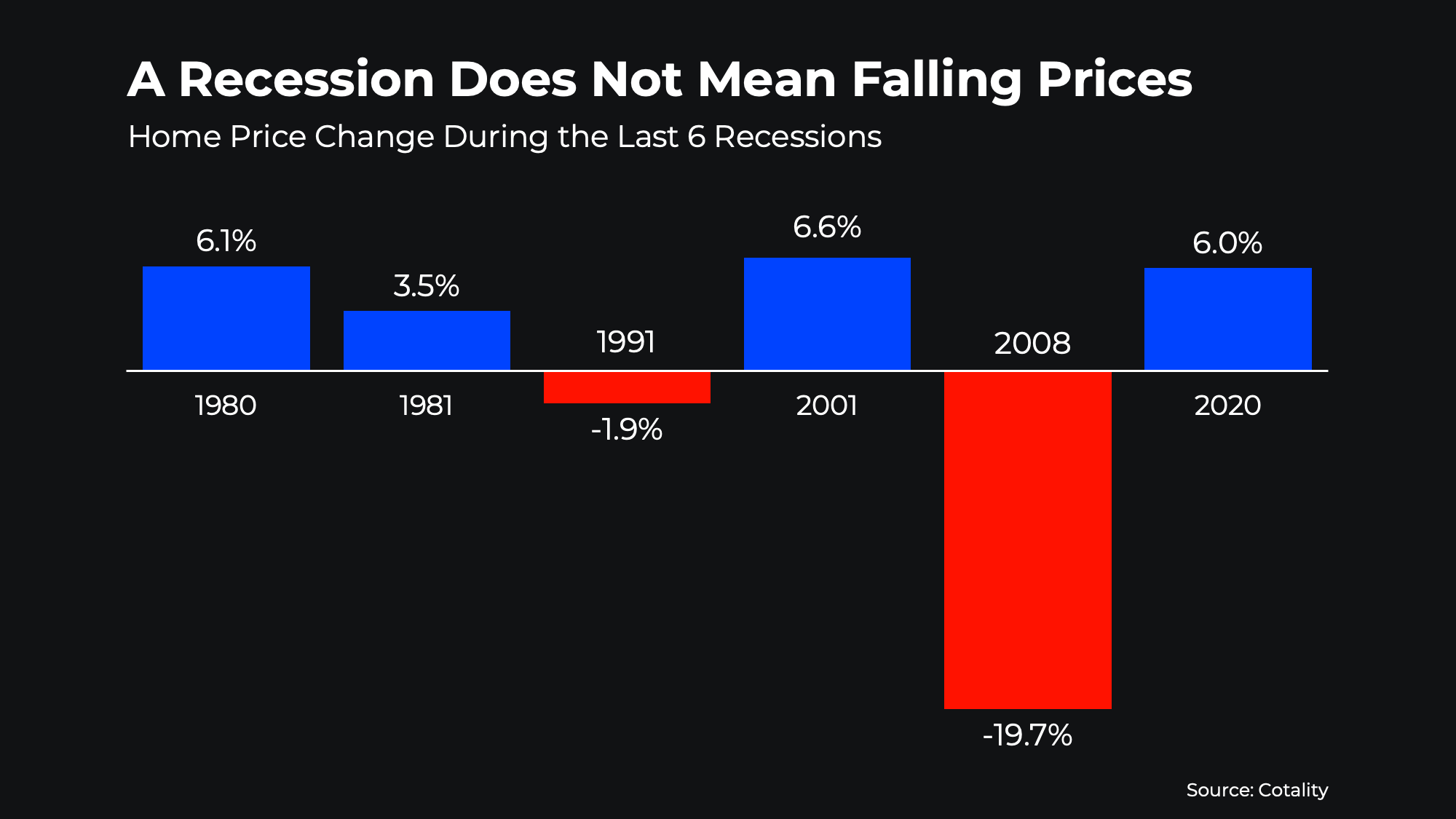 Don’t let fear of a recession make you assume prices are about to fall dramatically.
And since prices usually follow the path they're already on, in most markets they should rise, not fall, in the days ahead. The rise just may slower, or even flat, but certainly not a crash.
Mortgage Rates Typically Decline During Recessions
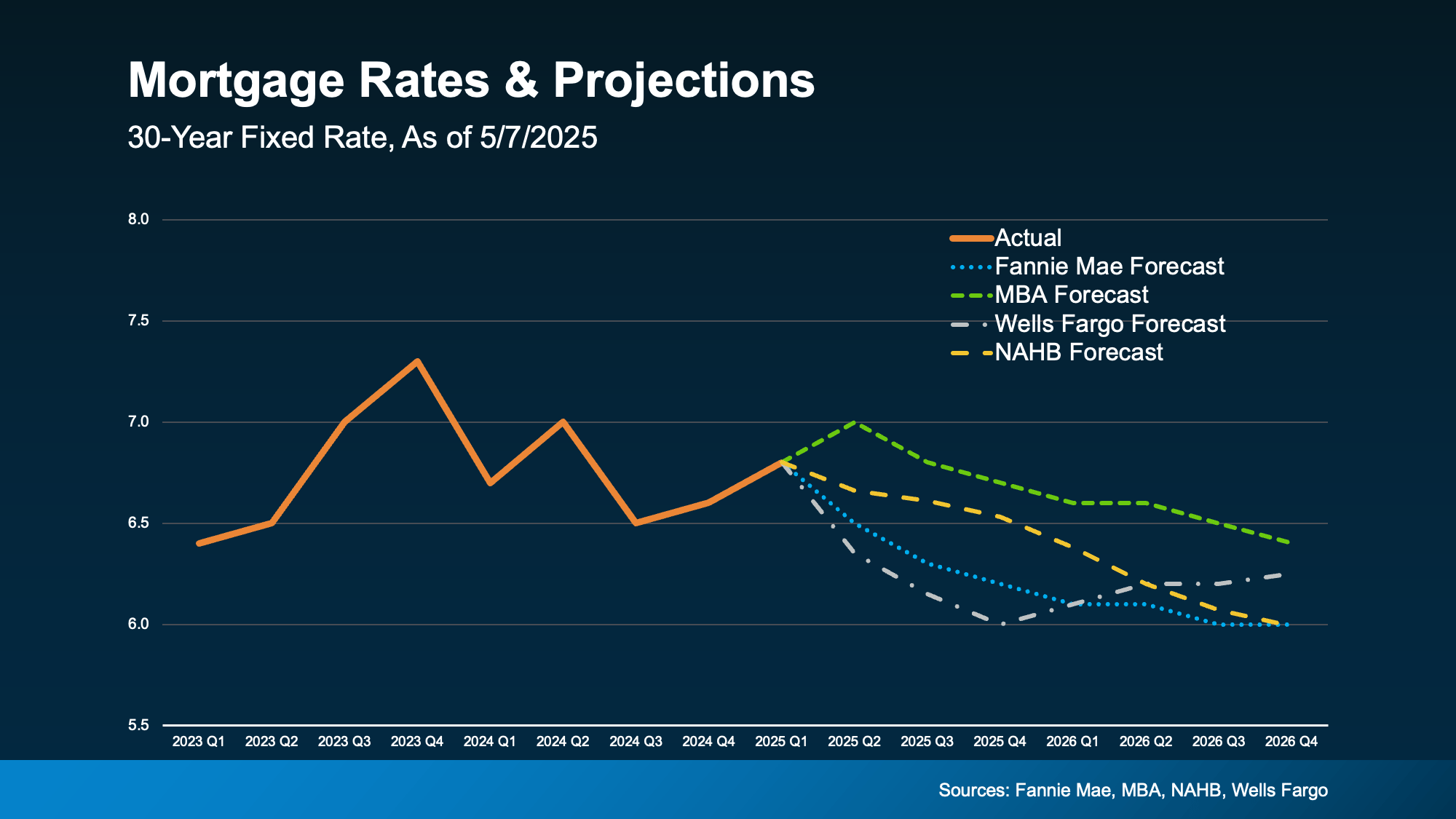
Another important pattern you should know? Mortgage rates usually fall when the economy slows down.
Looking at the data for the last six recessions, mortgage rates came down each time — helping boost buyer purchasing power, even during tougher economic periods (see graph below):
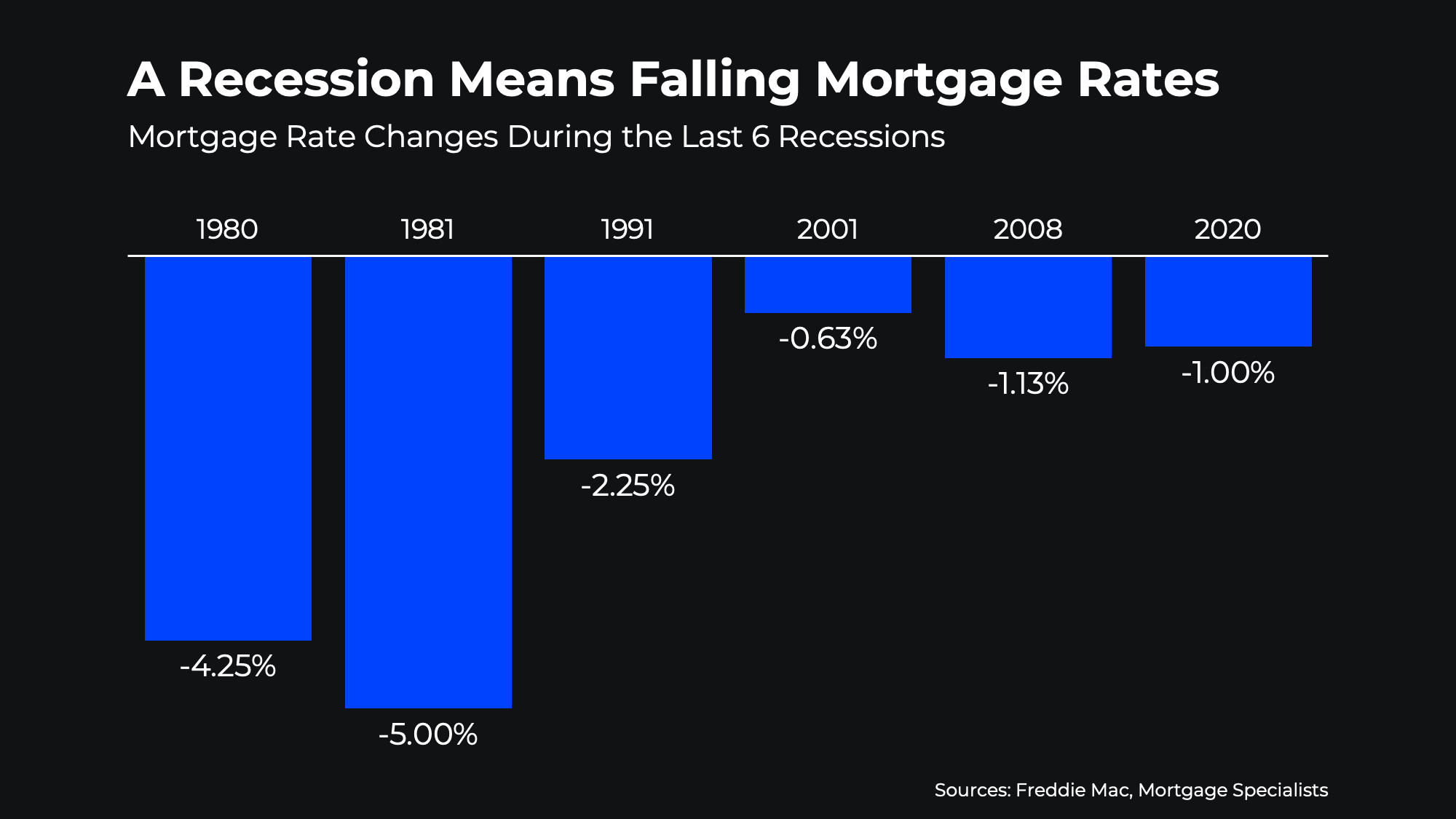 If a recession does happen, history suggests you could see some relief in mortgage rates. However, it’s important to stay realistic. While a dip is possible, we’re unlikely to return to the ultra-low 3% rates seen in 2020 and 2021.
Bottom Line
Economic shifts are part of the cycle, but they don’t have to derail your plans to buy or sell a home. Don’t let fear be the thing that keeps you from your next move.
Instead, lean on facts to guide your decisions. And your trusted REMAX agent is the perfect person to make sure you have the information you need to feel confident moving forward.

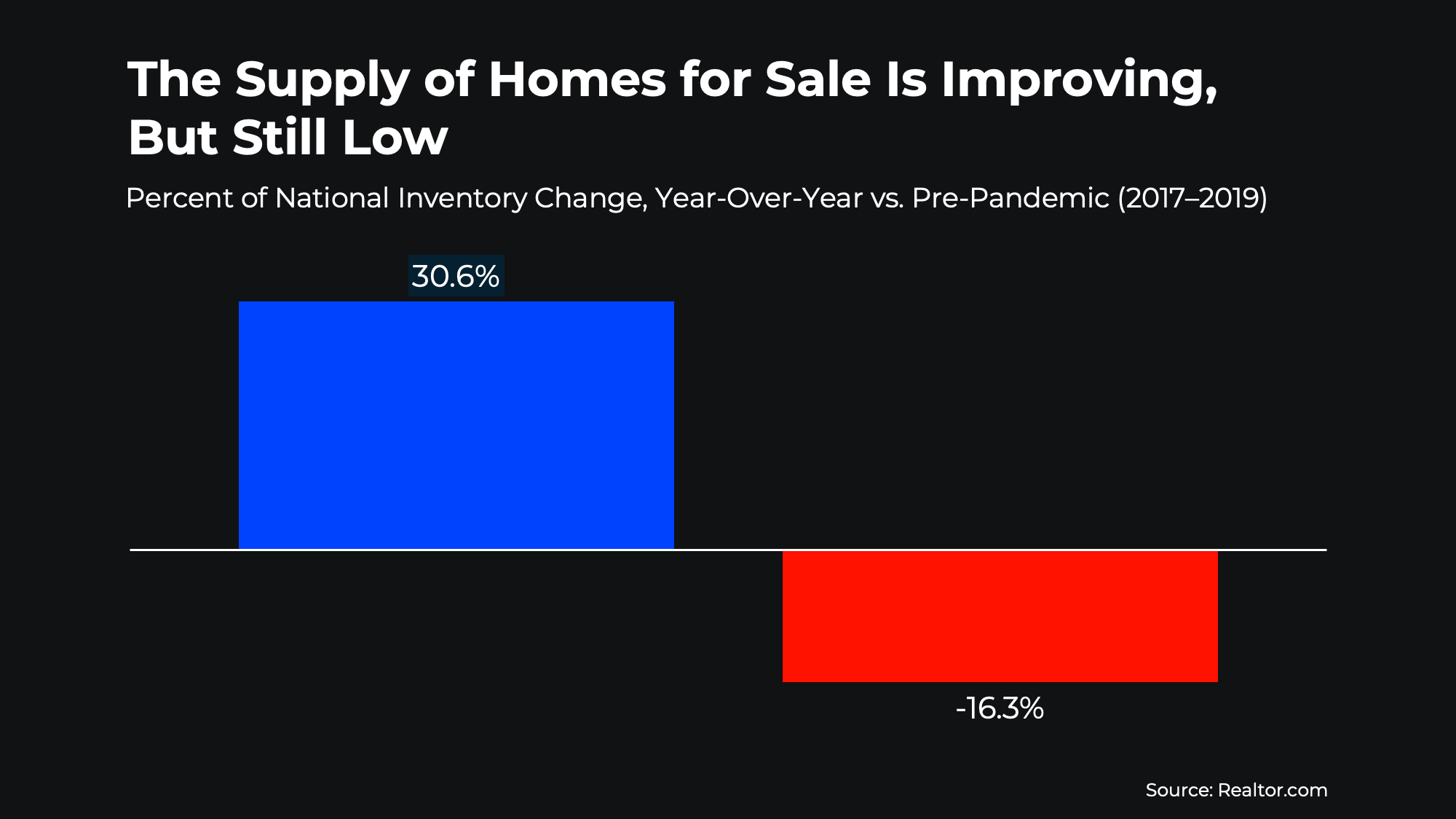 Basically, you’re not stuck anymore. But you’re not competing with a flood of listings either. That’s a seller sweet spot.
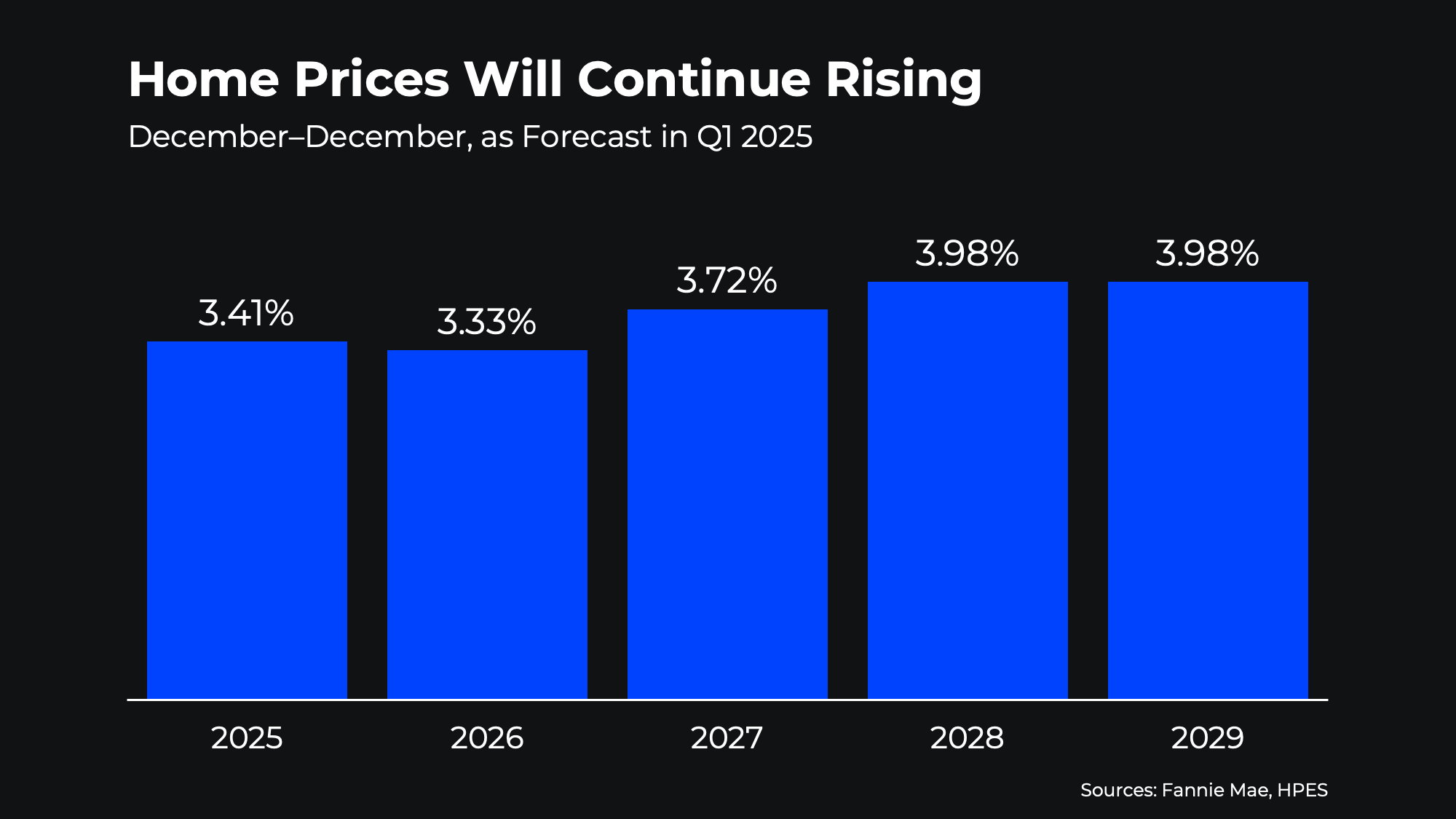 And that's exactly what makes the next few years such a critical window for buyers. It means prices will continue to rise nationally. Sure, there will be some areas where price trends vary. Let’s say a local market has a surplus of homes for sale — that could result in prices easing in that market. But even in markets experiencing more modest price growth or slight short-term declines, the long game of homeownership usually wins over time.
 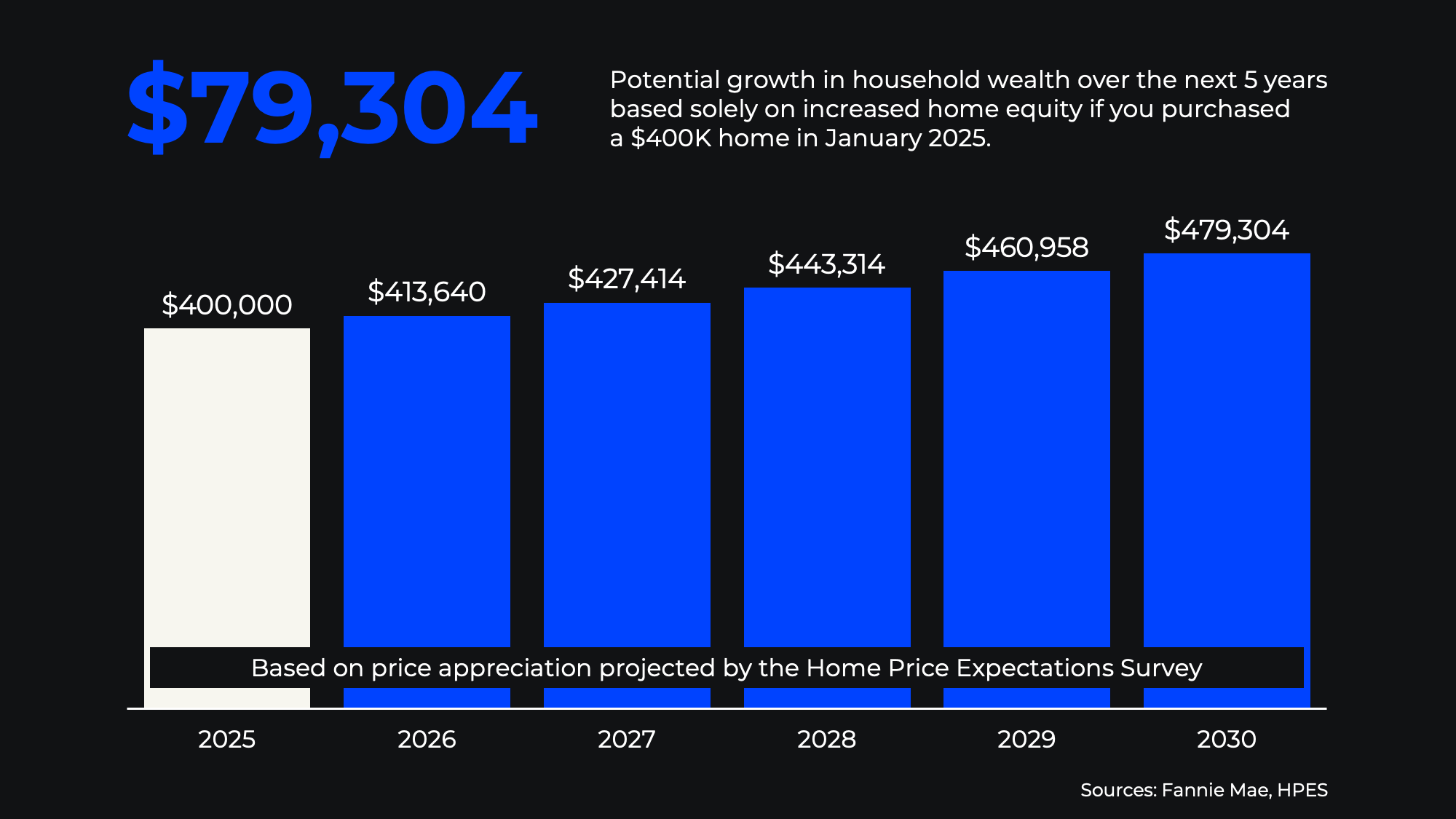 That’s $80K you could be gaining in home value — or losing out on if you keep sitting on the sidelines.
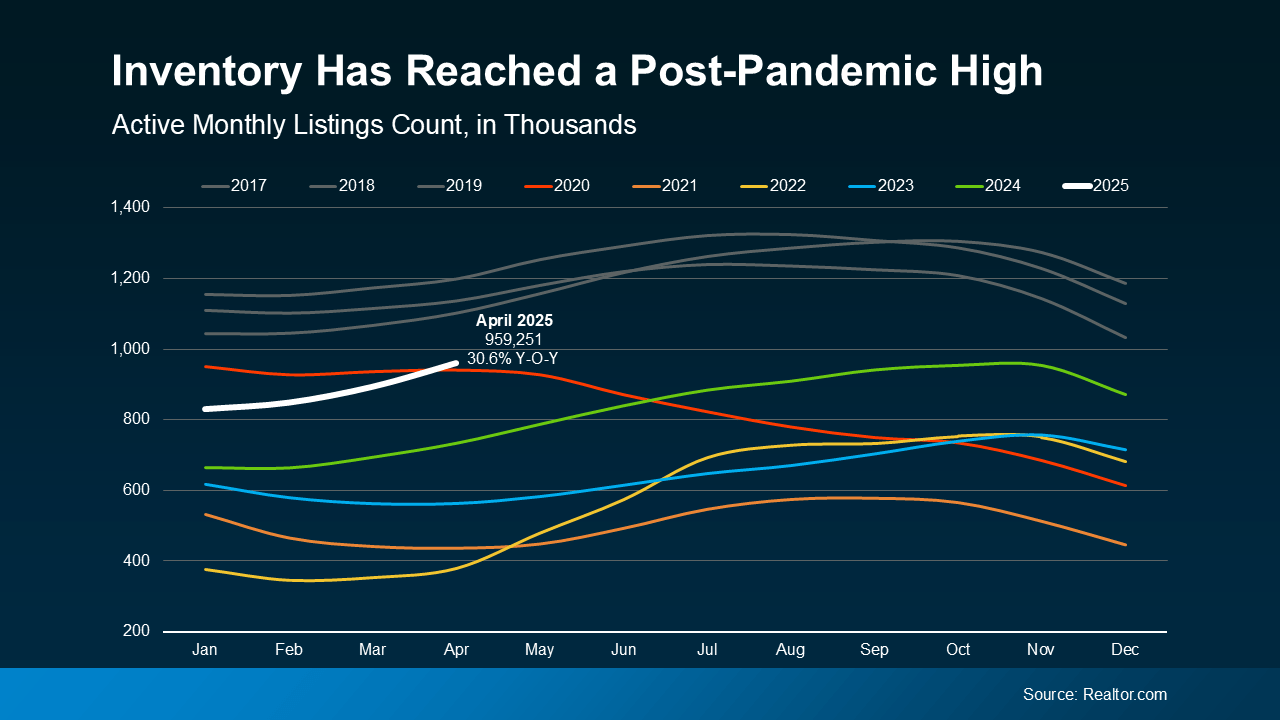 That means there are more homes for sale now than there have been in quite some time.
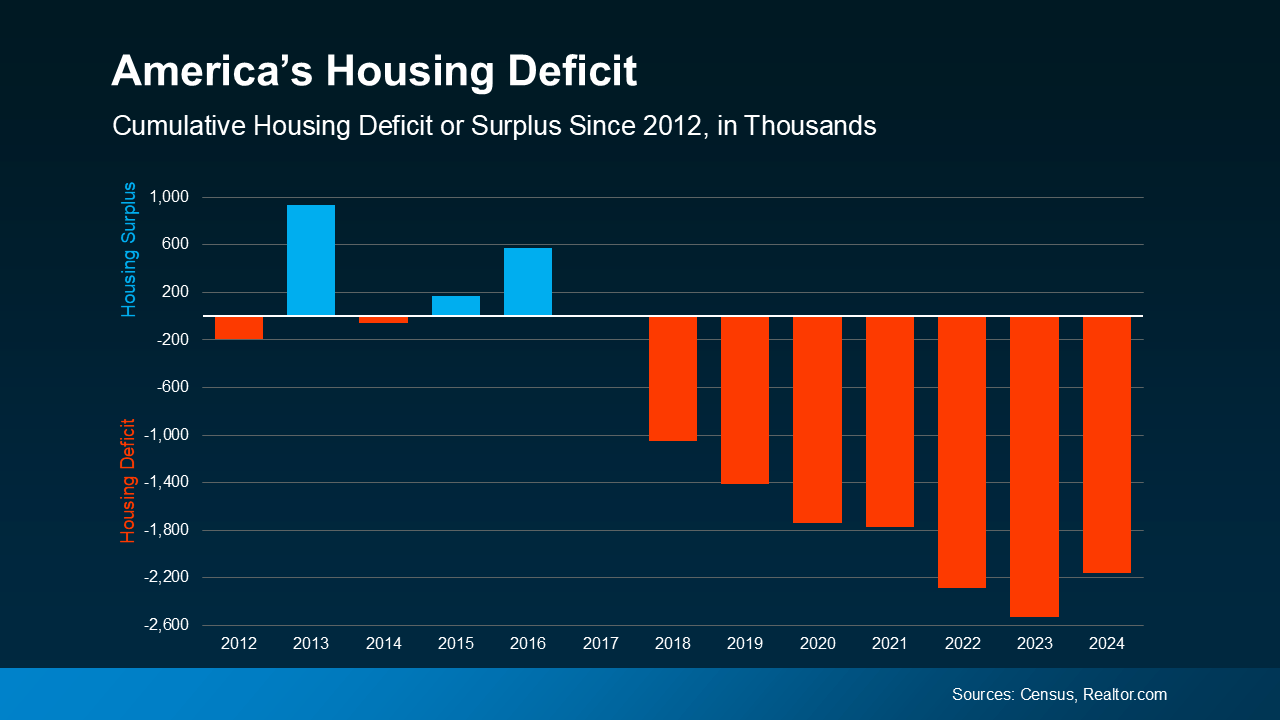 And one of the reasons this housing shortage kept growing is because new home construction just didn’t keep up with the number of people who need to buy homes. In fact, the U.S. is actually short millions of homes at this point, and it will take years to overcome that gap. Realtor.com says:
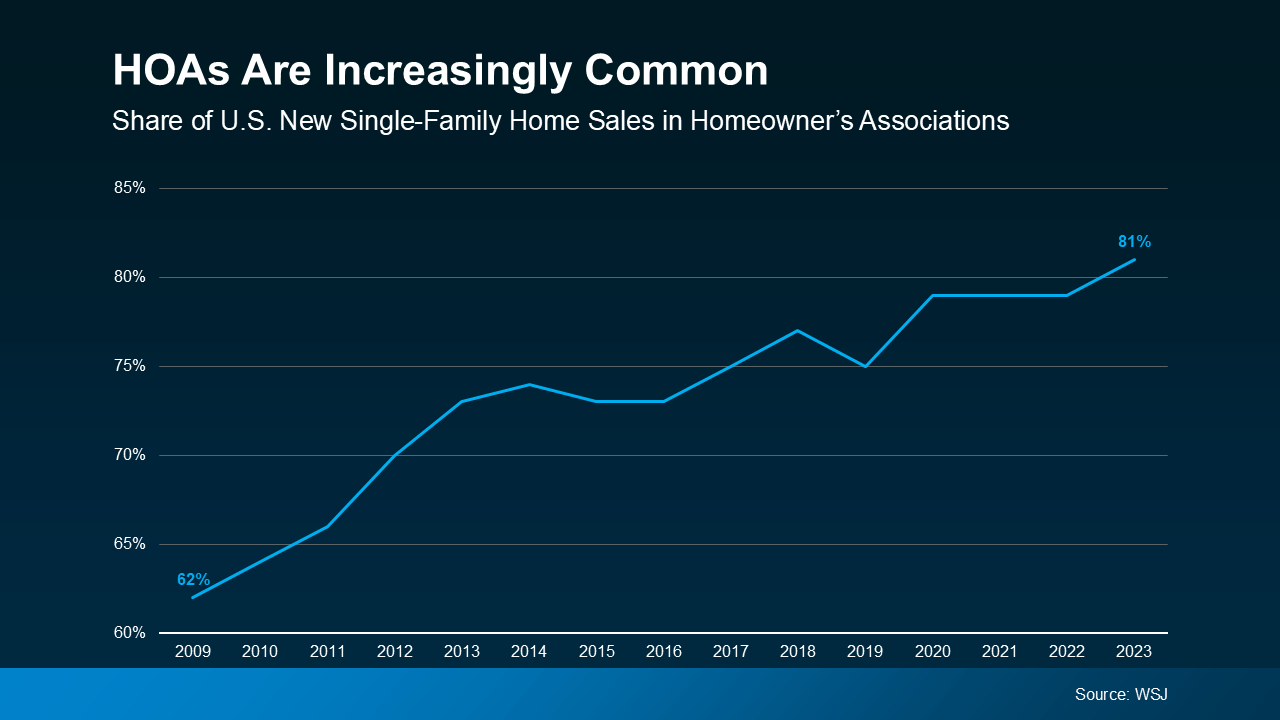 But it’s not just new builds that have homeowners associations. Homes that were previously lived in may have an HOA fee too. According to Axios roughly 4 out of every 10 homes had an HOA in 2024.
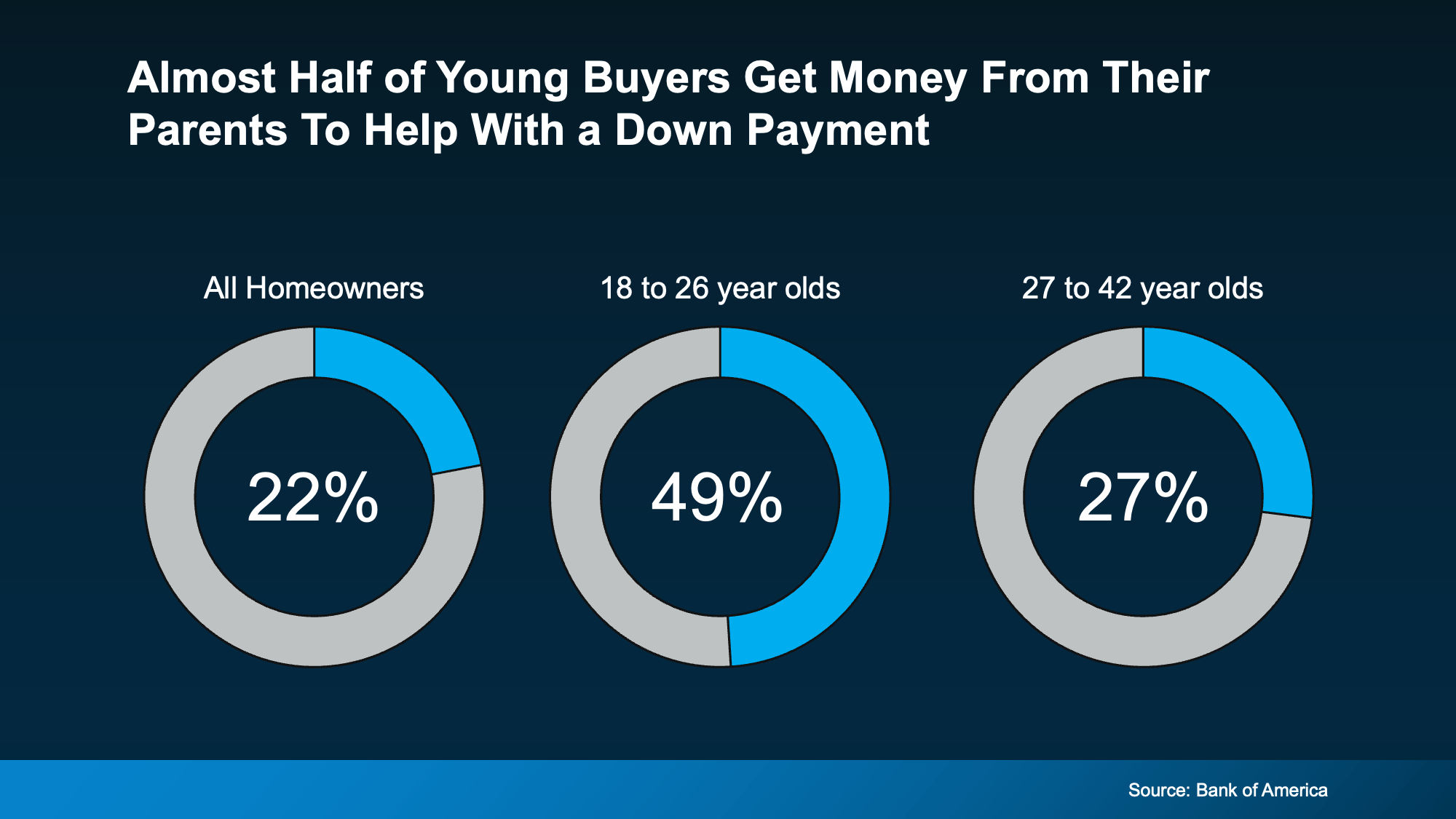 Even though the data doesn’t specify how many parents used their equity, the wealth they’ve built through homeownership may have helped make it possible – especially given how much equity the average homeowner has today.

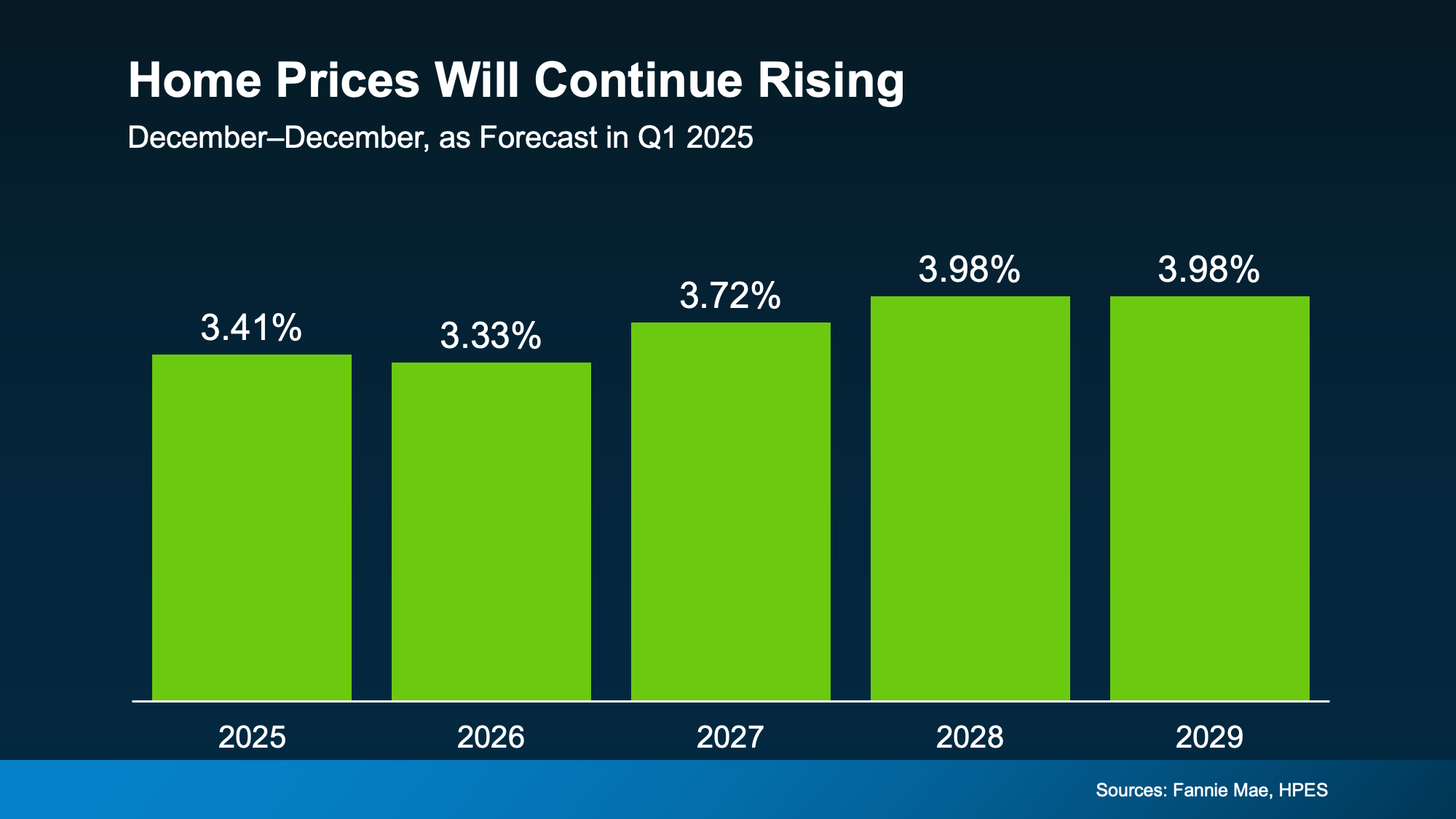 While those projections aren’t calling for big increases each year, it's still an increase. And sure, some markets may see flatter prices or slower growth, or even slight dips in the short term. But look further out. In the long run, prices almost always rise. And over the next 5 years, the anticipated increase – however slight – will add up fast.
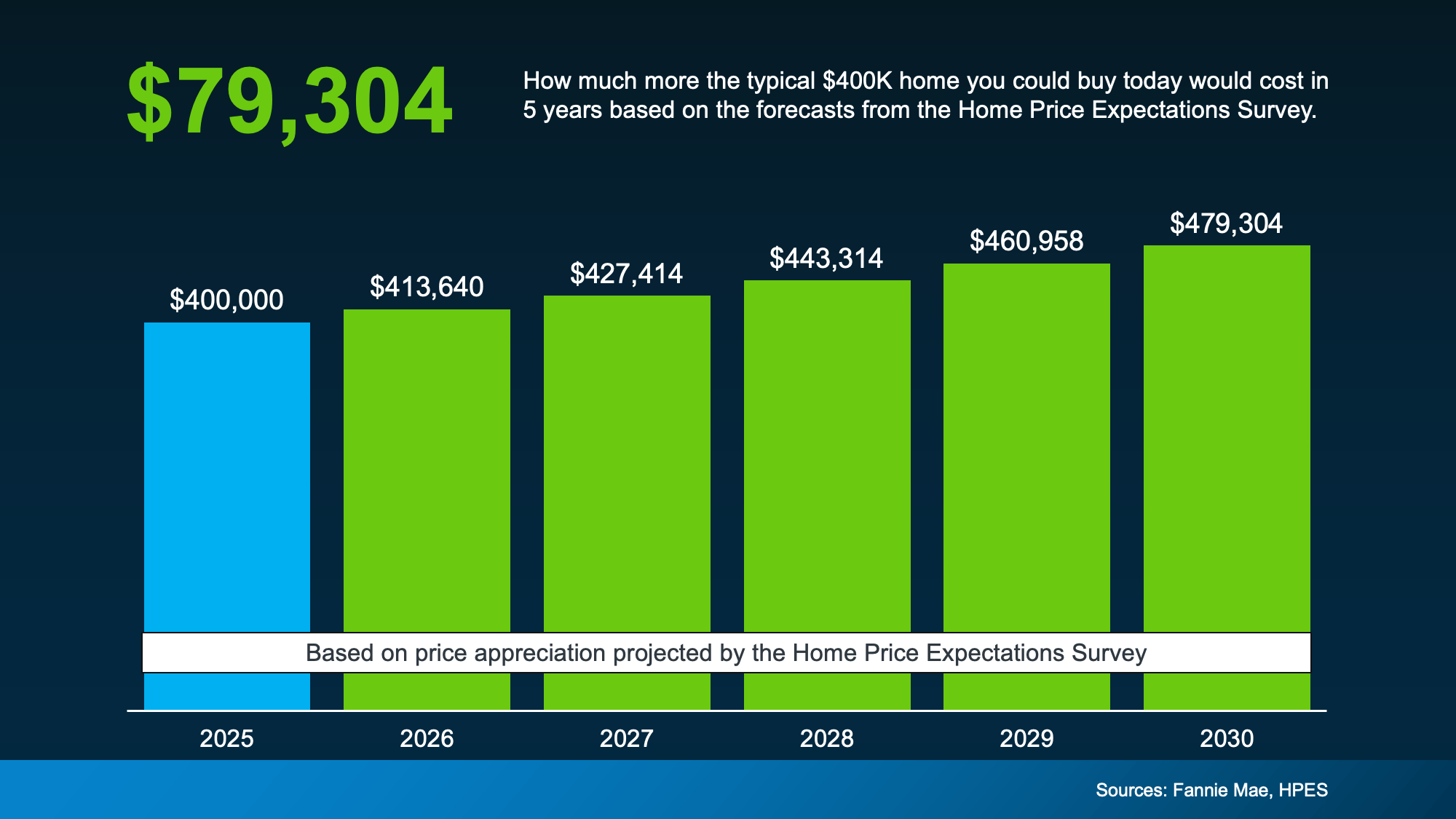 That means the longer you wait, the more your future home will cost you.
  So, the question really isn’t: “why would I move?” It’s: “when should I?” – because when you see the real numbers, waiting may not be the savings strategy you thought it was. And that’s the best conversation you can have with your trusted agent right now.
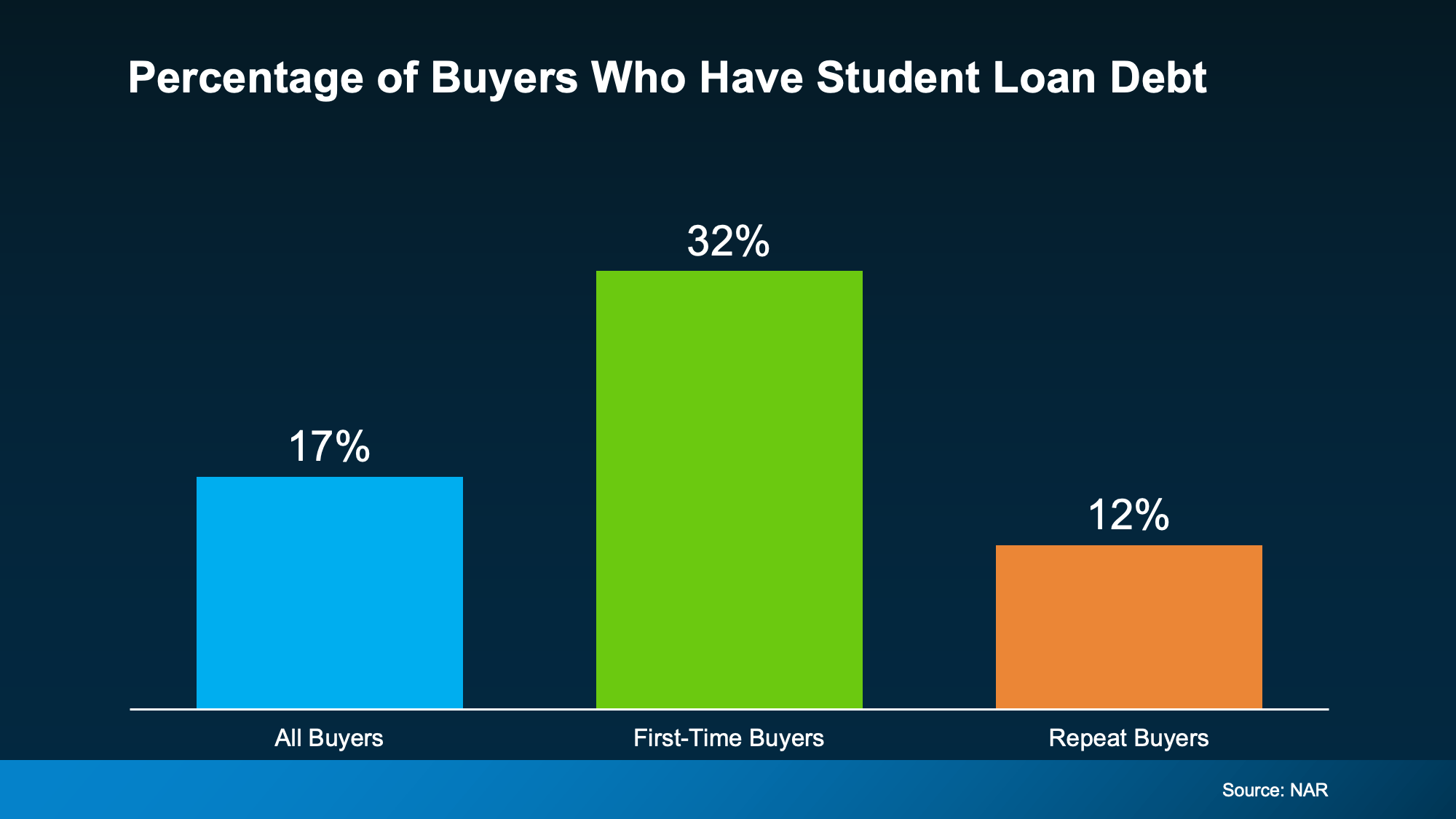 While everyone’s situation is unique, your goal may be more doable than you realize. Plenty of people with student loans have been able to qualify for and buy a home. Let that reassure you that it is still possible, even as a first-time buyer. And just in case it’s helpful to know, the median student loan debt was $30,000. As an article from Chase says:
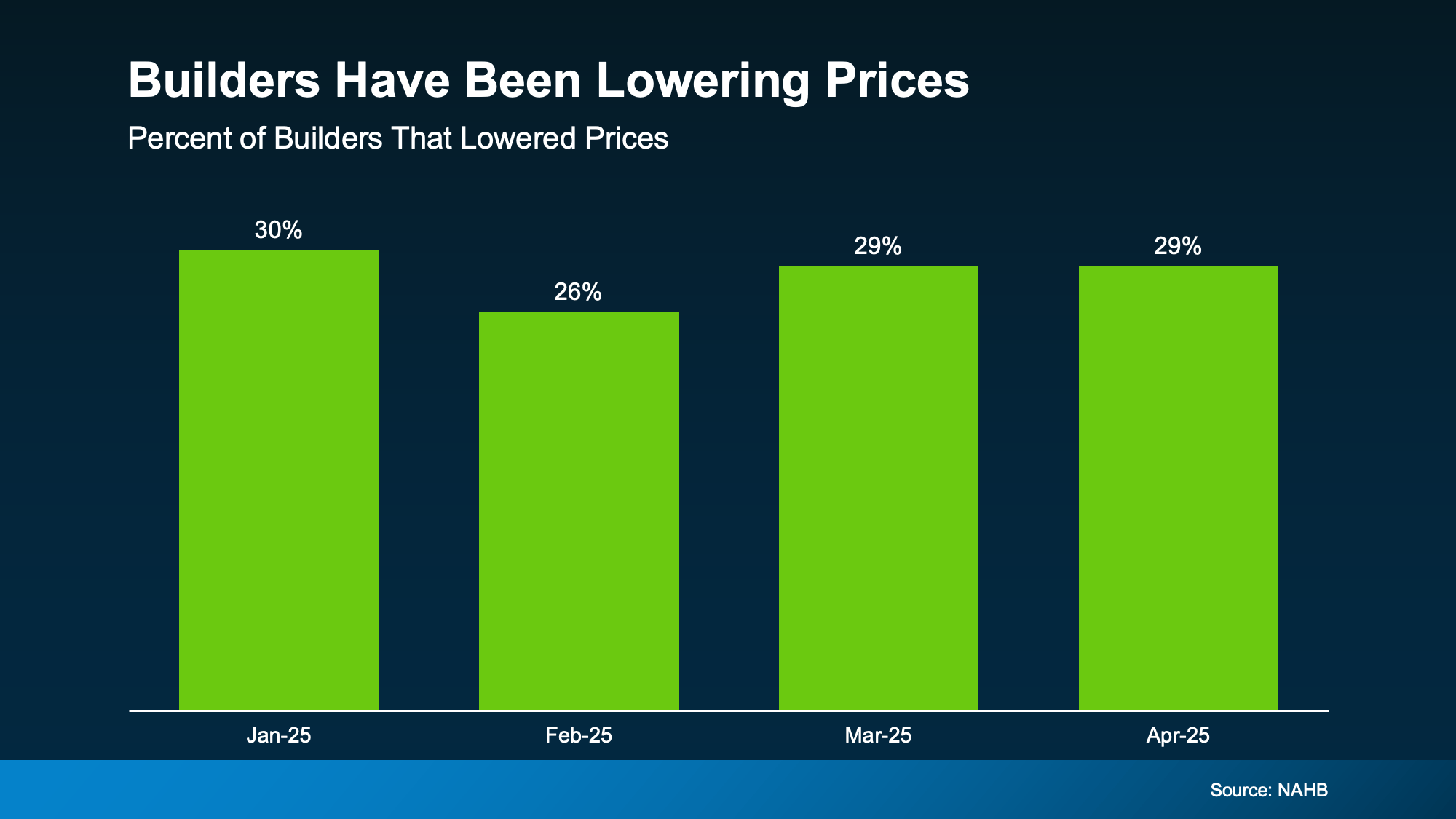 Around 30% of builders lowered prices in each of the first four months of the year. While that also means most builders aren’t lowering prices, it also shows some are willing to negotiate with buyers to get a deal done.
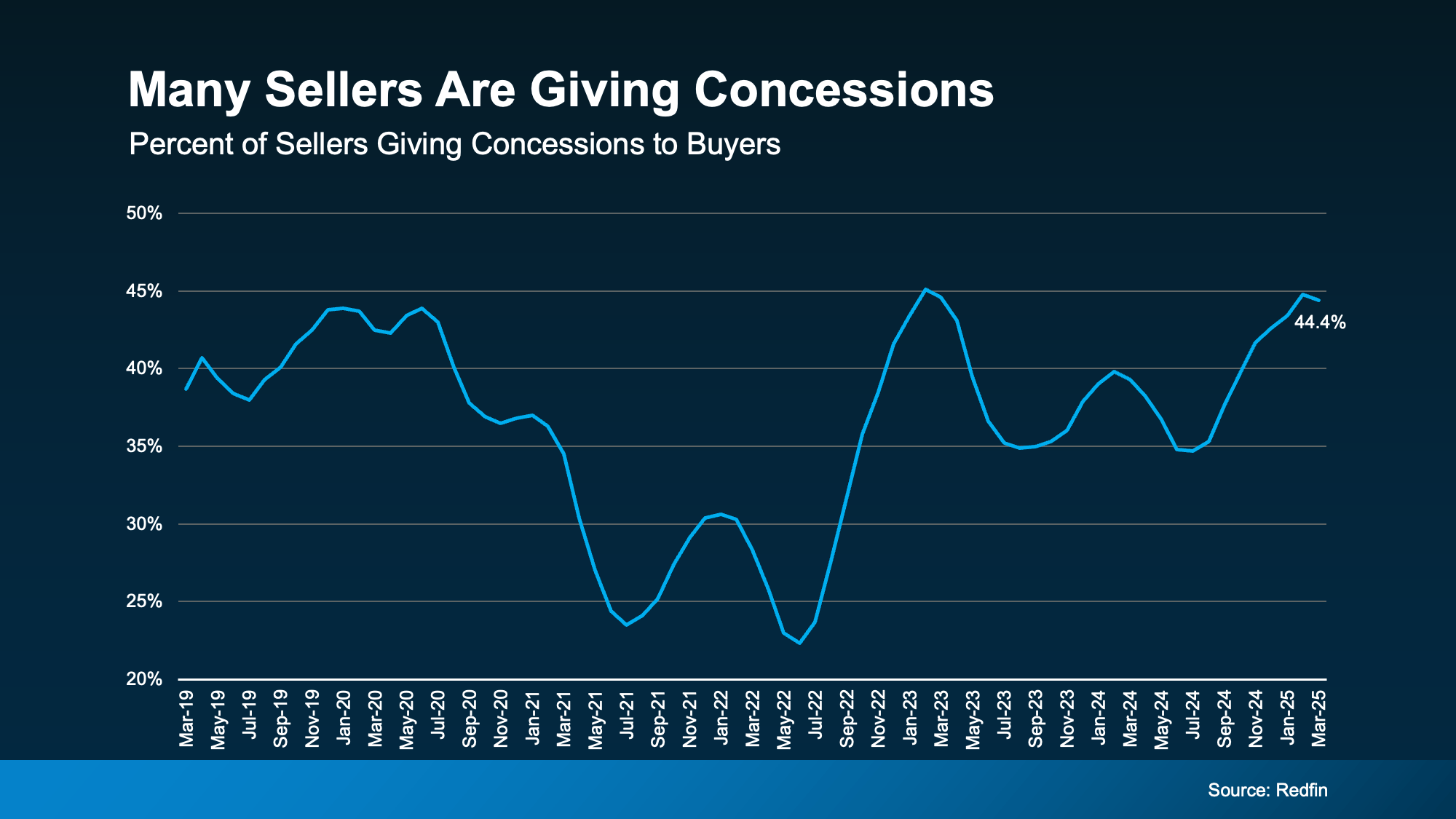 And, if you look back at pre-pandemic years on this graph, you’ll see 44% is pretty much returning to normal. After years of sellers having all the power, the market is balancing again, which can work in your favor as a buyer.